


Some concerts grip you by the throat from the first note. Others need time. With Madre Selva, the programme that Ensemble Vedado and singer-traverso player Diana Baroni brought during the closing day of the phenomenal 40th Festival de l'Abbeye de Saint-Michel en Thiérarchie, I initially had the feeling that it was such a concert. As I listened, I had to think of a beautiful English expression: it has to grow on you. Music that doesn't reveal all its secrets immediately, but slowly seeps in.
Madre Selva is an ode to nature, rooted in South American musical traditions but at the same time much more than that. In the programme notes, the earth is presented as a universal mother. Even gold loses its lustre eventually, we read, while life itself remains fragile and finite. The music invites us to return to what is essential: the beating of the heart, breathing, rituals, silence and connection with nature.
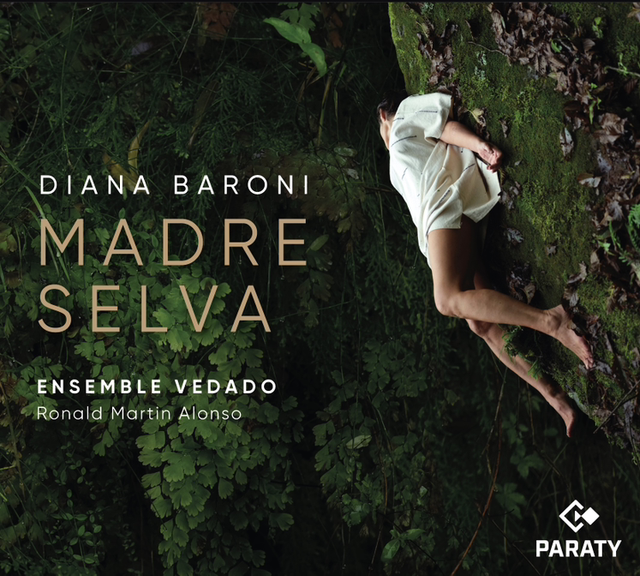 More than once, the programme brought me back in idea to Haydn's Die Schöpfung. Not because the music resembled it, but because the same wonder about creation was continuously present. Every step in nature seemed to be celebrated here. That feeling was further strengthened by the beautiful ballads of Tunde Jegede. One of his texts told that in the beginning there was not the word, but the vibration. A thought that comes with particular force in a programme like this.
The music constantly moved between contemplation and festivity, between the earthly and the heavenly. One of the highlights for me was the Charpentier that flowed like a river through the programme. The combination of the taut viola da gamba and subtle natural sounds worked particularly beautifully. As if a stream ran through a forest and brought everything to life along the way. But there was also room for lightness and joy. La Guanábana celebrated the sweetness of tropical fruit in a wonderfully swinging atmosphere. Diana Baroni showed what a natural and supple voice she possesses. It became even more lively in the song about a street vendor trying to sell her fruit. The number culminated in a real Mexican discussion between the musicians, a playful moment that visibly amused the audience.
But seriousness was never far away. The song La muerte del animal was dedicated to the victims of the earthquake in Venezuela and was also used as a metaphor for the disappearance of poetry, literature and love from our modern world. It was one of those moments when the music clearly took on a broader social significance. Throughout the entire concert, poetry and words also played an important role. Texts were spoken, sung and woven into the music. During Calor, the audience was even invited to chant along: "tambor, tambor, tambor". I must honestly admit that I still don't know exactly what I chanted along to, but it worked contagiously. Shortly afterwards came La tarde pidiendo amor, one of the most tender moments of the afternoon. The song describes the mysterious transition from evening to night and was performed by the ensemble with great refinement.
The abbey church also proved to be an ideal setting for this music. For centuries, the praises of creation were sung here daily. At almost the same hour, that happened again, albeit in a different musical language. And as if the symbolism wasn't grand enough, a bird suddenly flew freely through the choir of the church during the concert. At such a moment you can only think: this is absolutely right. The God who dwells here saw that it was good!
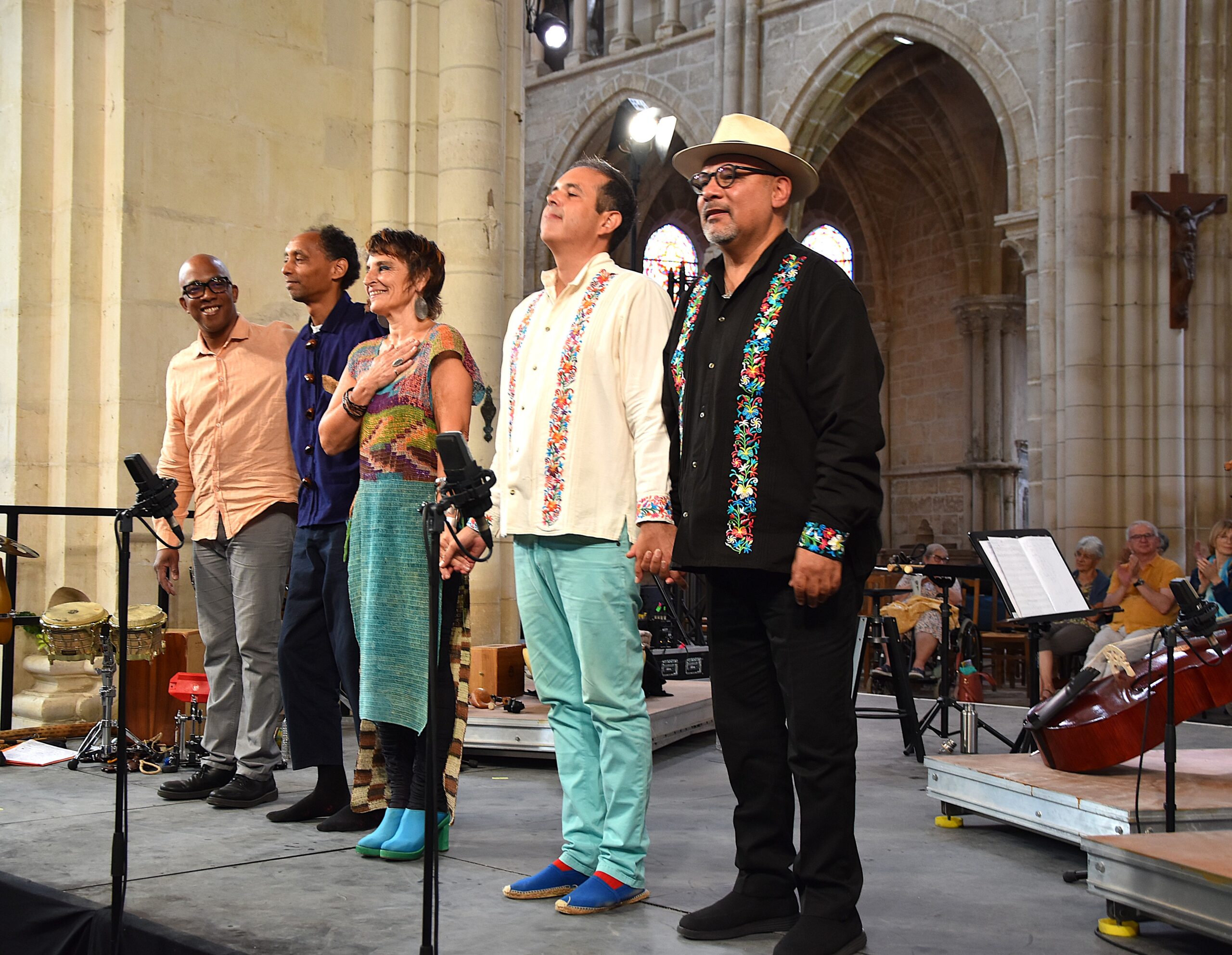 Ensemble Vedado was founded in Paris by Cuban gambist Ronald Martin Alonso and distinguishes itself by a continuous dialogue between styles, periods and cultures. Old and new, Europe and Latin America, classical music and folk music all have a place here. Alonso himself played the viola da gamba in a masterful way and combines great technical mastery with a pronounced personal vision. Mexican Rafael Guel Frías switched effortlessly between baroque guitar, flutes, singing and various other instruments. After the performance, he told me that the score requires continuous concentration due to the great variety of instruments. Abraham Mansfarroll provided a colourful percussion world that supported the entire concert.
And then there was of course Diana Baroni. The Argentine singer and traverso player has been among the absolute references of historical performance practice for years. Her recordings, with the greats of the earth, are still considered standards within the repertoire today. After the performance, she told a small anecdote. She knew that she had been in this abbey once before, but only remembered that morning why: years ago she made a recording here with Leonhardt of Bach's wedding cantata.
Even more important was what she subsequently said about friendship and love within the ensemble. According to her, those form the basis of everything Vedado does. It sounded beautiful, but above all: you could see and hear it too. That proved perhaps most powerfully during the encore.
In an incredibly beautiful encore, the word niña kept returning again and again. The tenderness with which it was sung seemed to fill the entire abbey church. Suddenly it became clear what this concert was really about. Not about styles. Not about genres. Not about historical performance practice or crossover. But about the warmth and power of music, about authenticity, about human connection and that, that is the essence of Madre Selva.
It also explained why the applause at the end was much more than a polite expression of thanks. The audience applauded for a long time, but especially rhythmically. As if it wanted to actively participate in what had emerged on stage. The five artists received this appreciation visibly grateful and moved. And rightly so. For what initially seemed like a concert that needed some time to develop had by the end grown into an experience that felt completely right. Like that bird above the choir. Like that abbey church. Like the music itself. Everything was perfect.
Those who want to hear these fantastic artists in this meaningful programme once more: that's possible on 23 August during the Festival de l'Eté Mosan in Dinant.