

From the global program package, deSingel distills a festival each month, ranging from small to large. From February 1 to 4, that was MYSTERIA. Artists bring the audience into contact—both visually and aurally—with the mysterious, the mystical, the intangible. And there is certainly interest in this secularized society!
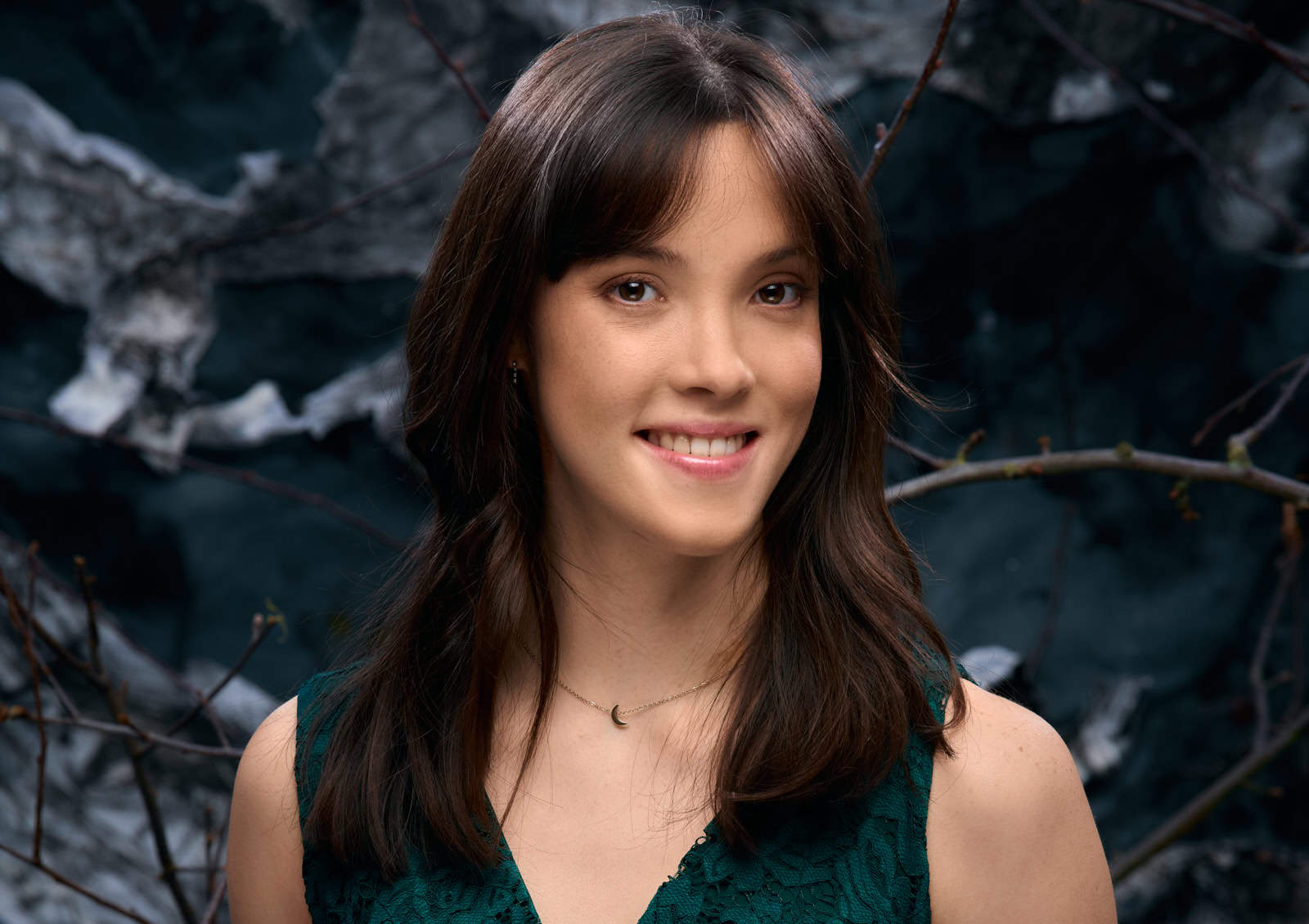
Friday evening, full house. In the Red Hall, the dance production Mysterie Sonatas / for Rosa, in which Anne Teresa De Keersmaeker connects the motif of the rose—since ancient times the symbol of mystery—with the Baroque Rosary Sonatas by Heinrich Biber. In the Blue Hall, a subdued, at times ethereal concert with compositions by Dmitri Shostakovich, Johann Sebastian Bach, and Arvo Pärt. The performers were Ralph van Raat on piano and Sylvia Huang on violin.
With a great fascination for the oeuvre of Arvo Pärt, this time I chose not to attend a dance performance but the concert.


MYSTERIA
Ralph van Raat also has a soft spot for the Estonian composer. In this concert, he traverses the world of Pärt, as it stretches between brutal avant-garde and sweet 'tintinnabuli'. There are also excursions to Bach and Shostakovich, both of whom had an important influence on Pärt's development. Ralph van Raat takes on the largest portion of the concert. In some compositions, Sylvia Huang also performs.
As the opening work: Prelude and Fugue No. 18 in f, opus 87 by Dmitri Shostakovich (1906-1975) from a cycle of piano pieces following The Well-Tempered Clavier by J.S. Bach. Followed by Sonatina for piano No. 1, opus 1/2, Sonatina for piano No. 2, opus 2/2, and Partita for piano, opus 2 by Arvo Pärt (°1935). Compositions from the early period of his career when he was still searching and was influenced by, among others, Béla Bartók, Sergei Prokofiev, and Dmitri Shostakovich. He liked to experiment with various compositional techniques. Ralph van Raat has a restrained manner of playing, and the shimmering sound of the piano does the rest. As the third work before the intermission, master Johann Sebastian Bach (1685-1750) takes his turn with his Sonata for piano and violin No. 6 in G, BWV 1019. Since she became a laureate in May 2019 at the Queen Elisabeth Competition for violin and received the Cecilia Prize for Young Musician that same year, the musical career of young Sylvia Huang has been on an upward trajectory. Bach's music has both an aura of magic and a divine form. One of the most original characteristics of the Sonatas for violin and piano No. 6 in G, BWV 1019 is Bach's imagination in harmonic, melodic, and contrapuntal terms. The pianist's right hand and the violin must constantly answer each other, while the basso continuo is entrusted to the pianist's left hand.


If the first part before the intermission was still fairly energetic, the part after the intermission is introverted, enclosed. A textbook example too of tradition and innovation. Starting with "Schafe können sicher weiden" from the Cantata Was mir behagt, ist nur die muntre Jagd, BWV 208 by J.S. Bach, arranged by Egon Petri (1881-1962). It is a non-ecclesiastical secular congratulation cantata that Bach composed in 1713. And then both instrumentalists Ralph van Raat and Sylvia Huang lead the audience into the universe of Arvo Pärt, music stripped of all bombast, distilled to its essence. Pärt does not lose himself in the infinity of details. His musical maturity is of a purity and dosage. Notes like fine filigree. Beginning with Für Alina, a short piano solo dedicated to Alina, the daughter of a family friend. Followed by Fratres, Für Anna Maria, and Spiegel im Spiegel. Chemistry develops between the two instrumentalists. Ralph van Raat lets the silence resound, which is an integral part of the composition. The audience is all attention, moved by the beauty and peacefulness of the compositions. There is music-making in a sacred silence. Music as a velvety soft caress that makes you completely zen. Ethereal spheres to lose yourself in.
Pärt's work has a large public reach. In 2020, 2021, and 2022, listeners of the classical VRT station Klara voted Arvo Pärt's Spiegel im Spiegel first place in the Klara Top-100.
Art, as an expression, is largely developmental dynamics. Art shows what otherwise goes unseen. Scraping the mirror to see what lies behind the gleam. It is the privilege of the artist to polish the mirror of our existence until every detail is razor-sharp and/or distorted and is catapulted back onto our entire being. That is precisely what Arvo Pärt can do, and therein lies his virtuosity.
WHO: Sylvia Huang [violin], Ralph van Raat [piano]
WHAT: Shostakovich, Bach, Pärt
WHERE: deSingel (Antwerpen)
WHEN: February 3, 2023 at 8 p.m.