Well, you don't expect something like this, and then during the performance it becomes clear that none of the orchestra members received training at a music school. Where then? Despite my repeated question, it remained unanswered. Knowing there is already a certain connection with Placido Domingo, the many young musicians aged roughly 16 to 30 will probably be taught in the temple. They already know the blows of the musical whip in general and of their instrument, and better than expected. Because to be fair: I went out of curiosity with the idea: "This can't be that good, it will be some amusement." Amusement was certainly in the program, but also seriousness, a bridge between East and West, call it if you like a Eurasian project that, through music and Buddhist philosophy, advocates peace wherever it may be. Preferably peace in which music is the universal uniting language, which overcomes conflicts and respects everyone's individuality, cultural background, traditions, religions and so on, with mutual positive cross-fertilization. That cross-fertilization was strongly woven through the program as a red thread.
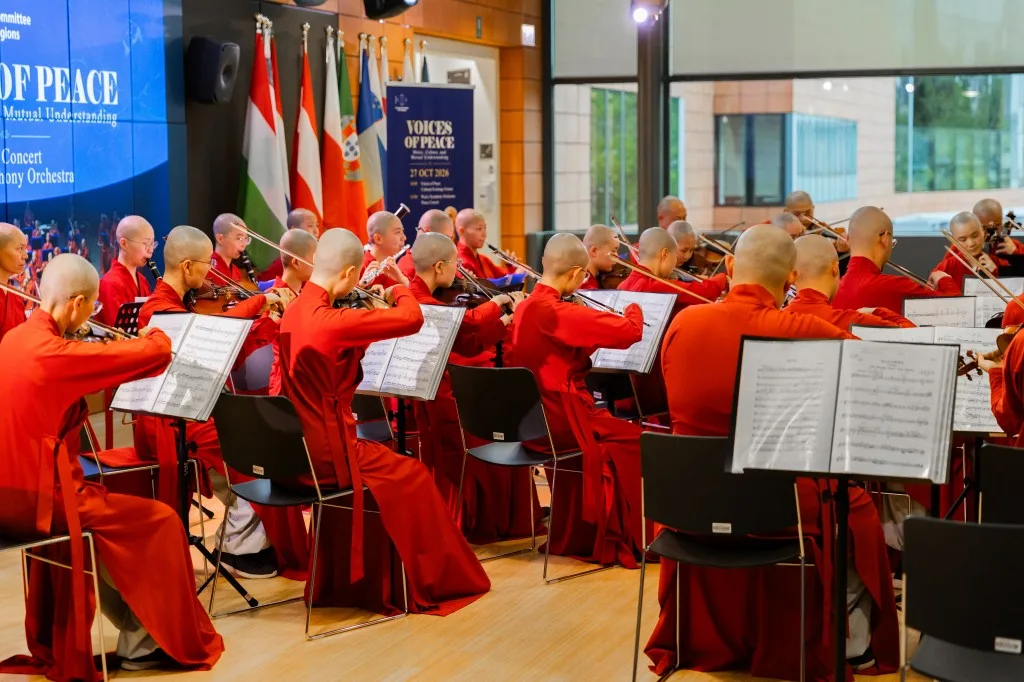
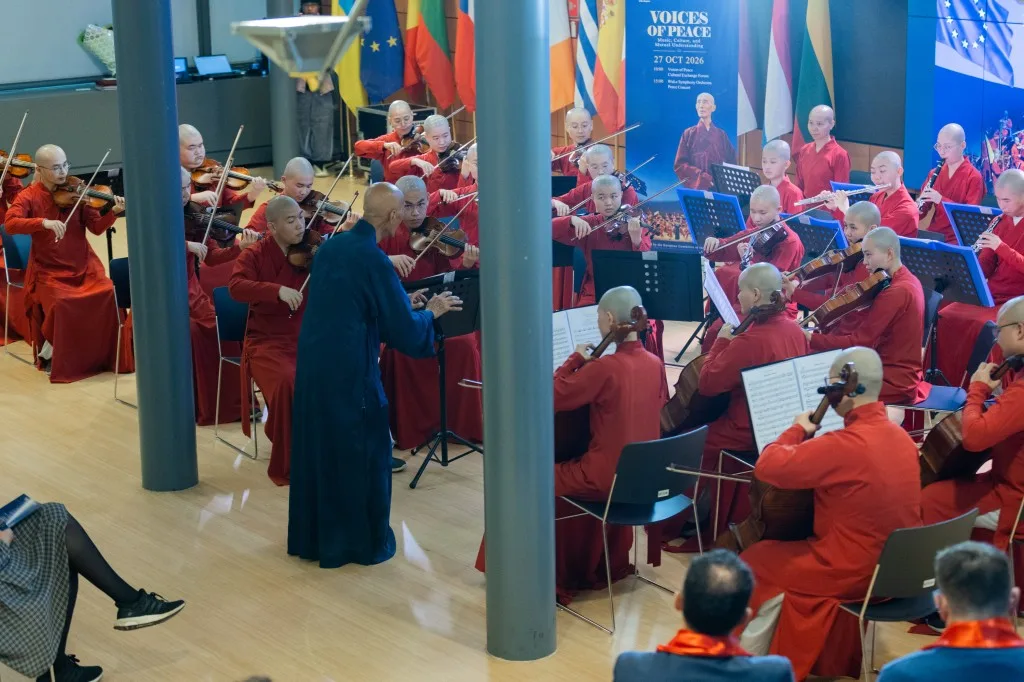
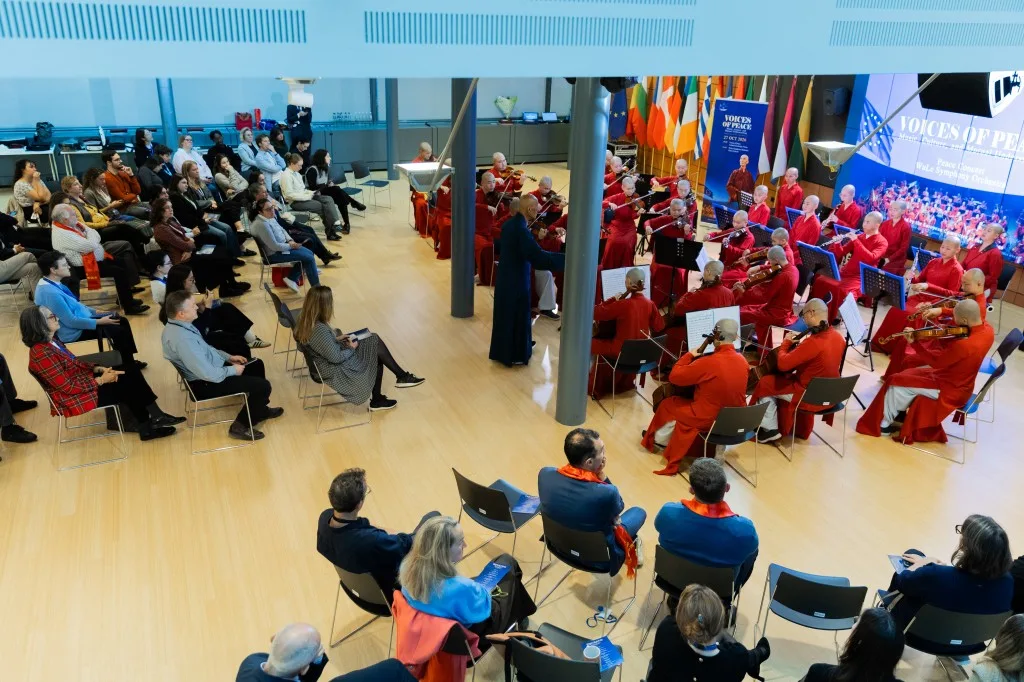
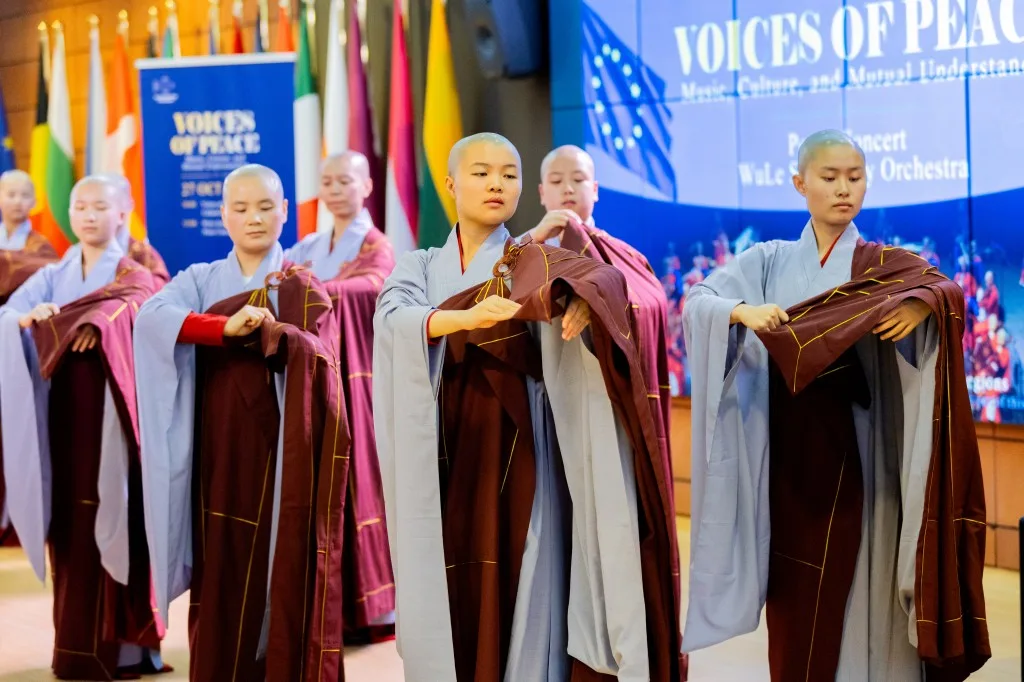
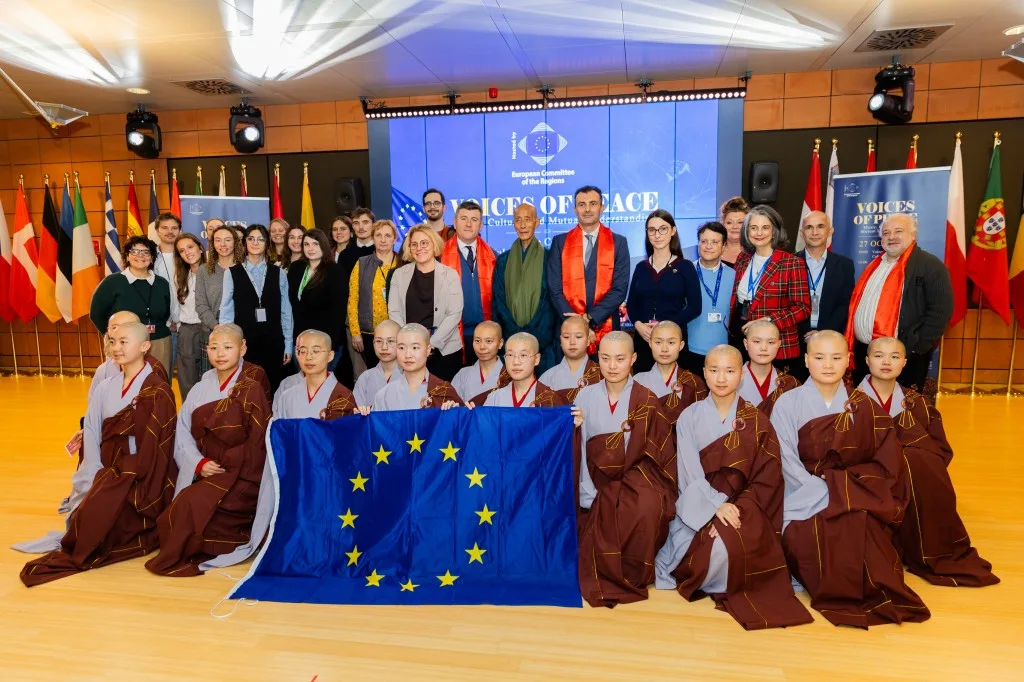
WuLe Symphony Orchestra performs peacefully in the European Centre of the Regions, the Jacques Delors building in the European quarter in Brussels
A morning was set aside to make clear, through a few speeches, what the intention is. Through music to contribute to world peace, with the message that the universal language of harmonic, tonal music reaches everyone and is understandable, and creates an atmosphere that brings contentment. Extending that line could help end many conflicts and wars. Imagine, for example, that Russian and Ukrainian musicians found each other and, thanks to music, could bring a definitive end to that years-long war. Wouldn't that be miraculous? No more bloodshed, mutilation, destruction, and in its place peace. May it be?
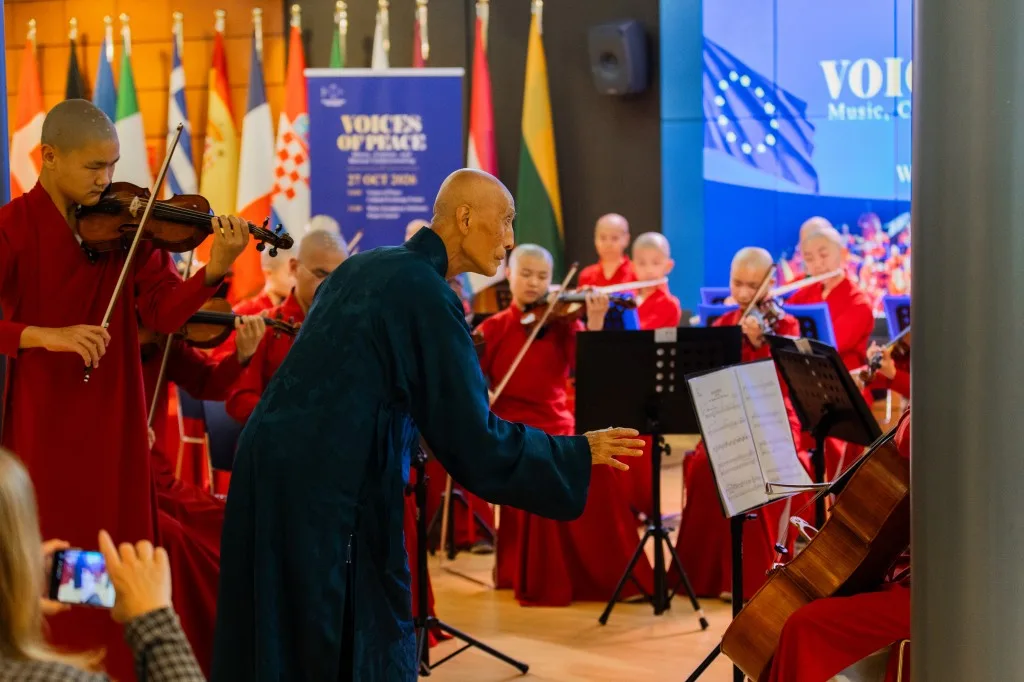 A masterful conductor
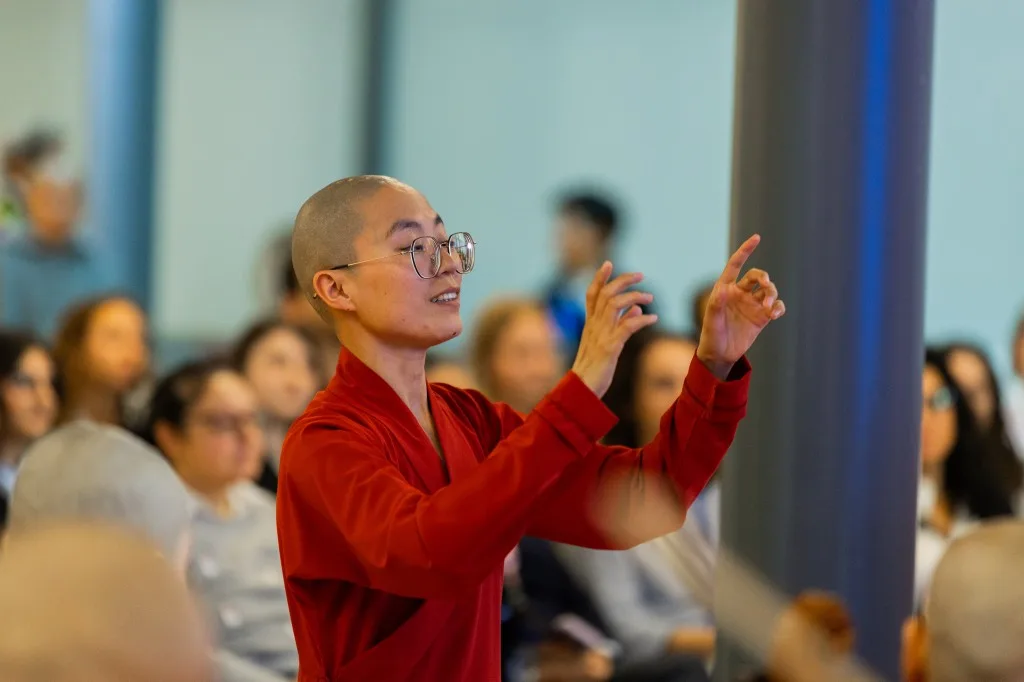
The orchestra is the initiative of maestro Shi Wule, abbot of the Xizu Temple in Madagascar, founder and conductor of the orchestra that bears his name. The man understands our Western classical music excellently, which translates very clearly into the interpretation: tempi, phrasing, musical content, everything resonates as we are used to. He knows how to couple this with original Chinese compositions that fit Western classical music, yet sound very "Eastern" in melodic lines and colorings. A chamber piece without a title makes it immediately clear as the concert opener, such that the audience, in this case all staff of the European Centre of the Regions, is immediately silent and goes along with the smoothly seeping sounds. That "Dance of the Golden Snake" is Eastern needs no further explanation, nor does "Blooming Flowers and Full Moon".
The violin concerto that follows should also be performed more often on our stages. It is a concerto written by He Zhanhao and Cheng Gang and bears the title "The Butterfly Lovers Violin Concerto". A soloist from the orchestra plays it very competently and, with a fairly broad palette, manages to bind the audience to him. This is new work that is original and above all beautiful, free of neo-avant-garde twists and contrived dissonances, simply beauty, purity.
After the Chinese influence, the orchestra indulged in the andante of Haydn's 94th Symphony, an andante that has won the hearts of music lovers for many, many years, and rightly so. It is gentle, friendly, seasoned with humor. A contrast with the first movement of Mozart's 25th Symphony, which opens so darkly, anxiously. A pity the pieces followed each other so quickly, because after Mozart's emotionally heavy work came the can-can of Offenbach very soon. It is strange to see this performed by Buddhist monks in pink robes with a broad smile on their faces. We won't imagine how they would dance that can-can... After another fiery Spanish piece by Pascual Marquina, the symphonic part – well, symphonic: the chamber orchestra of the larger symphony orchestra played here – was closed with Johann Strauss Sr.'s crowd-pleaser that makes you clap along: indeed, the one and only Radetzky March.
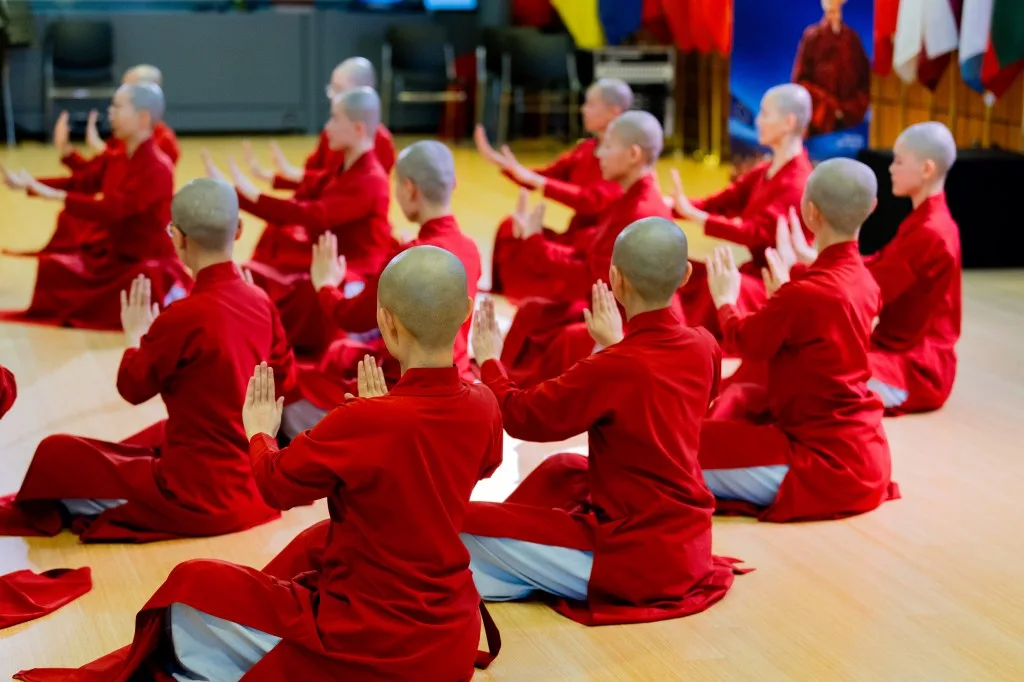
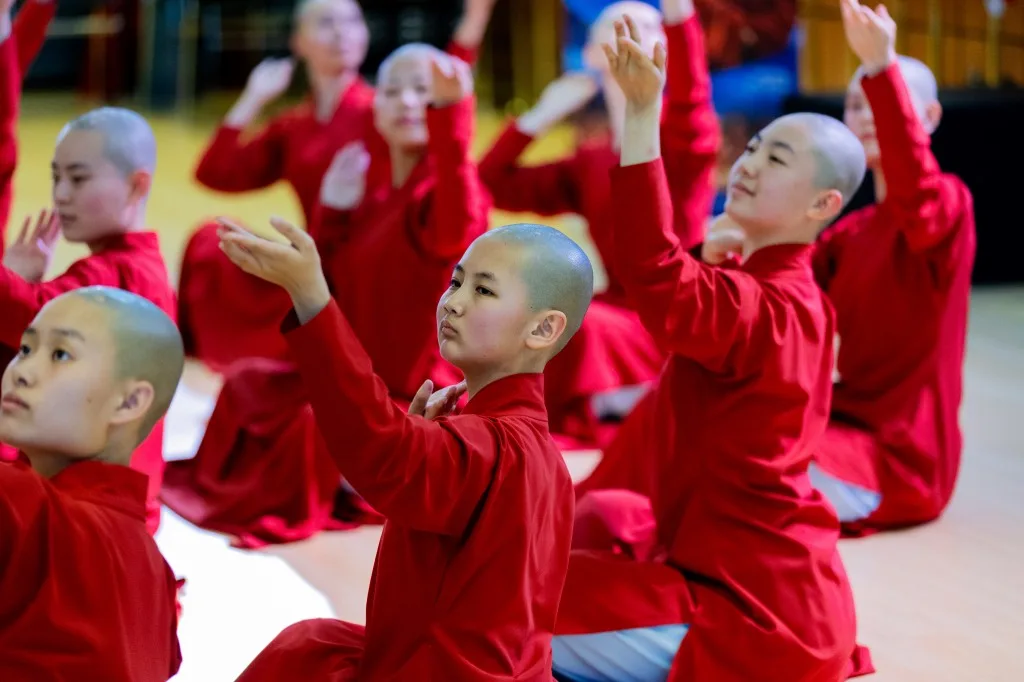
The young nuns of this mixed monks' orchestra presented two more eye-pleasing dances. It produced refined impressions that let you go home with a feeling of peace. Mission accomplished. May they now quickly perform for the war profiteers wherever in the world. Cram the big shots together in a hall, have them listen, and at the end place a peace treaty under their noses and have it signed. Wouldn't that be nice?